Gut Health Nutritionist for Bloating, IBS, and Chronic Digestive Symptoms
You have cut out gluten. You have tried probiotics. You have been told your tests look normal and that it’s probably just stress. Yet you’re still bloated, still exhausted, and still planning your day around a bathroom.
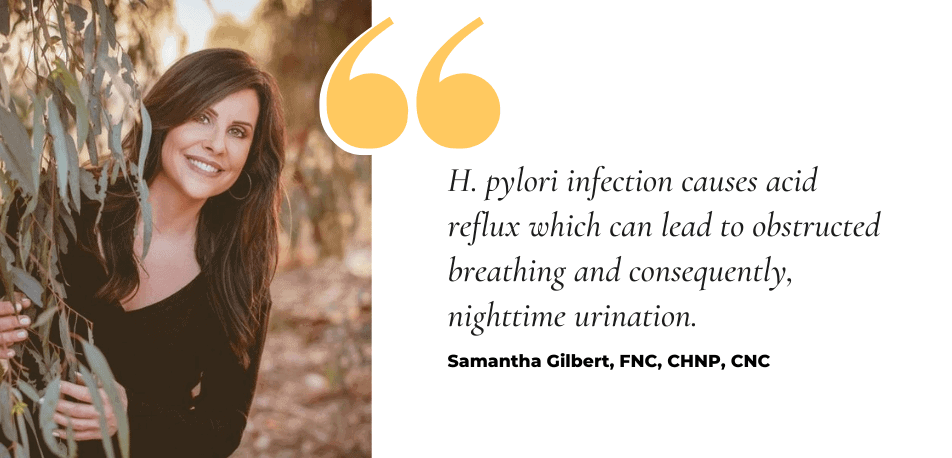
I’m Samantha Gilbert, FNC, CHNP, CNC. I’m a functional nutritionist who works with people whose digestive symptoms have never been fully explained—not with a generic elimination diet, but by testing what’s actually happening in your gut and building a plan around what we find.
I work with clients virtually, one on one, from anywhere in the United States and worldwide.



Can a Nutritionist Help With Gut Health?
Yes, and often more than people expect. Most digestive symptoms are not caused by one “bad” food. They are caused by what is living in your gut, how well your gut lining is holding up, how you are digesting, and how your nervous system is affecting all of it.
Those are all things food, nutrients, and lifestyle can directly change. That is exactly what I work on with you.
What makes my approach different from a standard nutrition consult is that I don’t guess. I use functional lab testing to look at your microbiome, your gut lining integrity, your digestive function, and your nutrient status. Then I build your plan around what your results actually show, not around whichever protocol is popular this year.
I test first
Functional stool testing, nutrient panels, and a detailed history. We find the drivers before we build the plan.
I treat the whole system
Your gut affects your mood, your energy, your skin, your hormones, and your immune system. I do not look at digestion in isolation.
I work with your care team
With your consent, I coordinate with your physician, gastroenterologist, or therapist so your care stays safe and joined up.
Signs Your Gut Needs Attention
Gut trouble doesn’t always look like gut trouble. Some of the clearest signs show up far from your stomach. Here are the patterns I see most often in the people I work with:
Digestive signs
- Bloating that gets worse through the day
- Gas, cramping, or abdominal pain
- Constipation, diarrhea, or both
- Acid reflux or heartburn
- Feeling full after a few bites
- Reacting to more and more foods
Signs people do not connect to their gut
- Anxiety, low mood, or mood swings
- Brain fog and poor concentration
- Fatigue that sleep does not fix
- Acne, eczema, rosacea, or psoriasis
- Joint pain and stiffness
- Iron or B12 deficiency that keeps coming back
If several of these sound familiar, that’s not a coincidence. It is a pattern, and patterns are testable. Take my free five minute health assessment or book a call and we can talk it through.
Why Your Gut Affects So Much More Than Digestion
Your gut microbiome is an ecosystem. Bacteria dominate it, but you also have viruses, fungi, and protozoa living there, along with all of their genetic material. When that ecosystem shifts, the effects reach far beyond your digestion.
Your gut and your brain talk to each other constantly through what is called the gut brain axis. When that communication breaks down, it can show up as anxiety, depression, autoimmunity, ADHD, eating disorders, and autism.
There is a reason the gut is called the second brain. A large share of your neurotransmitters, including serotonin, dopamine, and GABA, are produced in the gut. And the enteric nervous system, a full neurological system in its own right, lines your entire digestive tract with more nerve endings than your spinal cord.
That system connects to your brain through the vagus nerve, which handles digestion, breathing, heart rate, speech, taste, and your fight, flight, or freeze response. When signaling between the gut and the brain is disrupted, the effects can reach memory, response time, appetite, mood, and sleep.
And when the wrong microbes take hold, they produce their own neurotransmitters in your gut that travel straight to your brain. That is how gut imbalance turns into heightened anxiety and panic. It is also why mineral balance matters here, and why some cases require copper toxicity nutrition therapy or pyrrole disorder support before the gut can fully heal.

What I Help With
Digestive symptoms overlap constantly. Part of my job is figuring out which of these you are actually dealing with, because the treatment is not the same.
IBS
IBS is usually diagnosed by ruling everything else out, which leaves you with a label and no explanation. I look for what is driving it: microbial imbalance, gut lining damage, poor digestive output, or nervous system dysregulation. Then we work on that.
SIBO
Small intestinal bacterial overgrowth shows up as relentless bloating, brain fog, fatigue, and joint pain. It also comes back if you only kill the overgrowth without fixing why it happened. More on my SIBO support.
Leaky gut
When the gut barrier becomes permeable, partially digested food and toxins pass through and trigger an immune response. That is where new food sensitivities, joint pain, headaches, and brain fog often start.
Candida and yeast overgrowth
Yeast overgrowth produces inflammatory byproducts that affect mood, cravings, and energy, not just digestion. More on candida support.
Histamine intolerance
Not every food reaction is an allergy. Sometimes your histamine bucket is simply full, and the gut is a large part of why. More on histamine support.
Reflux and heartburn
Antacids reduce the acid but do not address why digestion is failing in the first place. Long term suppression also affects how you absorb nutrients.
Food sensitivities
If your safe food list keeps shrinking, the answer is rarely another elimination diet. It is usually the gut barrier. More on food sensitivity support.
Gut driven anxiety and mood changes
When gut inflammation is feeding your anxiety, working on the anxiety alone will only take you so far. More on mood and nutrition.
What Actually Causes Gut Inflammation
People often assume they did something wrong. Usually it is a combination of things stacked up over years. Here is what I look for:
Diet
A high intake of processed food, sugar, and artificial additives, or the opposite, years of very restrictive dieting.
Food sensitivities
Specific foods that trigger an inflammatory response every time you eat them.
Microbial imbalance
Beneficial bacteria crowded out by opportunistic and pathogenic species.
Chronic stress
Sustained stress changes gut motility, stomach acid production, and barrier integrity.
Infections
Bacterial, fungal, viral, or parasitic infections irritating the gut lining.
Medications
NSAIDs, birth control, antidepressants, and repeated antibiotic courses, especially in childhood.
Environmental toxins
Ongoing exposure to pollutants and chemical load.
Inactivity
A sedentary pattern slows gut motility.
Poor sleep
Sleep disruption affects the microbiome directly.
Genetics and epigenetics
Inherited biochemical patterns and how your genes respond to your environment.
Is Your Gut Behind Your Anxiety?
In my younger clients, gut inflammation often shows up as anxiety in disguise. Tantrums, hyperactivity, and enormous meltdowns over small things. It frequently follows sugary processed foods loaded with gluten, dairy byproducts, and chemical flavorings engineered to hit brain receptors and create a short-lived high.
Those foods are triggers because they feed harmful microbes like candida, which produce inflammatory byproducts. Working with a nutritionist for children’s health gives you a roadmap for identifying which foods are overstimulating your child’s brain.
As adults, we learn to suppress anxiety instead. We isolate, we binge on food and alcohol, and we live our lives afraid to ask for help. I spent most of my life that way, so I understand it deeply.
People often ask me how they got a leaky gut, or why they have SIBO or yeast overgrowth. The answer is layered. Genetics play a part. So does epigenetics, meaning how your genes interact with your environment. Layer in work and relationship stress, medications, heavy antibiotic use in childhood, and a standard American diet or years of restriction, and the microbial terrain shifts. That is when the gut barrier becomes permeable.
You have a real intelligence living in your gut. Gut reconditioning, nutrient therapy, dietary therapy, and lifestyle changes are genuinely powerful. I have watched them change people’s lives, including my own.

Why I Test Instead of Guessing
Standard lab testing is built to catch disease. It is not built to catch the imbalances that leave you bloated, foggy, anxious, and exhausted while your results come back normal.
Normal means no diagnosable disease was found. It does not mean your gut is working the way it should. Functional testing looks at a different layer entirely.
Your microbiome
Which bacteria, yeast, and parasites are present, and in what balance. This is what a comprehensive stool panel shows.
Your gut lining
Markers of intestinal permeability and inflammation, which tell us whether the barrier itself needs repair.
Your nutrient status
A damaged gut stops absorbing properly. Zinc, iron, and B12 deficiencies are extremely common downstream of gut issues.
Testing is important and we discuss it together before anything is ordered. Nothing gets recommended that I cannot explain to you.
How We Work Together
Everything happens virtually, one on one. You do not need to live near me and you do not need to travel. All you need is a private space and a decent connection.
Free consultation
A 20 minute call. You tell me what has been happening. I tell you honestly whether I think I can help and whether we are a good fit.
Full intake and history
We go through your digestion, sleep, energy, mood, medication and family history, and everything you have already tried. This is where patterns usually appear.
Testing and interpretation
Test kits ship to your door and you complete them at home. Then we sit down together and I walk you through exactly what your results mean.
A plan that fits your family
A plan built around your results and your actual life. We adjust it as you go based on what is working and what is not.
To be clear about my scope: I provide nutrition therapy and education. I do not diagnose, prescribe, or provide crisis counseling. With your consent, I coordinate with your physician, gastroenterologist, psychiatrist, or therapist so your care stays safe and joined up.

Why Work With Me
I have spent more than 18+ years doing this work, and I came to it the hard way. I lived with anxiety, depression, disordered eating, chronic fatigue, and digestive problems for years while being told my labs were fine. Nothing changed until targeted testing finally explained what was actually happening in my body.
That is why I test. And it is why I will never hand you a generic protocol and wish you luck.
My training is in advanced nutrient therapy and functional testing, including GI Map training for digestive disorders through the Pomeroy Institute, microbiome training under research microbiologist Kiran Krishnan at Microbiome Labs, and extensive work with Drs. Mensah and Bowman at Mensah Medical. I am a member of the National Association of Nutrition Professionals and the Nutritional Therapy Association.
“I started working with Sami because of chronic digestive issues (and I was hoping that along the way I would lose about 30 pounds). Now, six months later, I am 33 pounds lighter and the problems I have suffered with for DECADES are significantly better! Amazing healing has occurred. I learned so much about what diet works for my system, and with Sami’s encouragement, I have developed really good habits that I know I will stick to because I feel so good!”
Nola Wood
Sami helped to turn around damage done to my gut from taking anti depressants which caused leaky gut. I am very thankful for her knowledge and guidance. My gut is functioning well. I’m no longer experiencing heartburn, gas, or bloating. My appetite has returned and I feel much better.
Carin
Frequently Asked Questions
Can a nutritionist help with gut health?
Yes. Diet, nutrients, and lifestyle directly change your microbiome, your gut lining, and your digestive function, which is where most gut symptoms actually originate.
Do you work with clients outside North Carolina?
Yes. All of my sessions are virtual and I work with clients across the United States and internationally.
Who is the best person to see for gut health?
See a gastroenterologist to rule out disease. See a functional nutritionist to find out why your gut is not working when the tests come back normal.
What is the best test to check gut health?
A comprehensive stool analysis with a zonulin marker. It shows your microbial balance, inflammation, digestive function, and gut lining integrity in one panel.
How do I know if my gut is inflamed?
The most common signs are persistent bloating, irregular bowel movements, reacting to more and more foods, fatigue, brain fog, mood imbalances, and skin flare ups.
Can a blood test detect digestive problems?
It can catch some things like celiac markers, anemia, and inflammation, but it will miss most microbial imbalances and gut barrier issues. Stool testing shows those.
How long does it take to heal your gut?
Most of my clients notice meaningful change within four to twelve weeks. How long full repair takes depends on what we find and how long it has been going on.
What are the worst foods for gut health?
Ultra processed foods, refined sugar, industrial seed oils, artificial sweeteners, and alcohol. Beyond that, your worst foods are personal and we identify them together.
Do I have to do a restrictive elimination diet?
No. If your food list is already shrinking, more restriction is usually the wrong direction. The goal is to widen what you can eat, not narrow it.
Is testing required to work with you?
Testing is important because it removes the guesswork, but the decision is always yours and we discuss it first.
Do you take insurance?
I do not accept insurance, but I do accept HSA cards.
Do you diagnose or prescribe?
No. I provide nutrition therapy and education, and I coordinate with your medical providers when appropriate.
Do you work with children?
Yes. Gut driven behavior and mood changes in children are a significant part of my practice. See my children’s nutrition page.
What does the free consultation involve?
A 20 minute virtual call to discuss what you are dealing with and decide together whether working with me makes sense. No obligation.
Let's Find Out What Is Actually Going On
If you have been managing your symptoms for years without ever getting an explanation, that is not a personal failure. It usually just means nobody has looked in the right place yet.
Book a free 20 minute consultation. No obligation, no pressure, just a conversation about your health.
Schedule Your Free Consultation
Take the first step toward real answers. Book your free 20-minute strategy session today – no obligation, no pressure, just a conversation about your health.
Serving worldwide via virtual consultations.
I do not accept insurance but do accept HSA cards.
Please read my frequently asked questions before filling out this form.